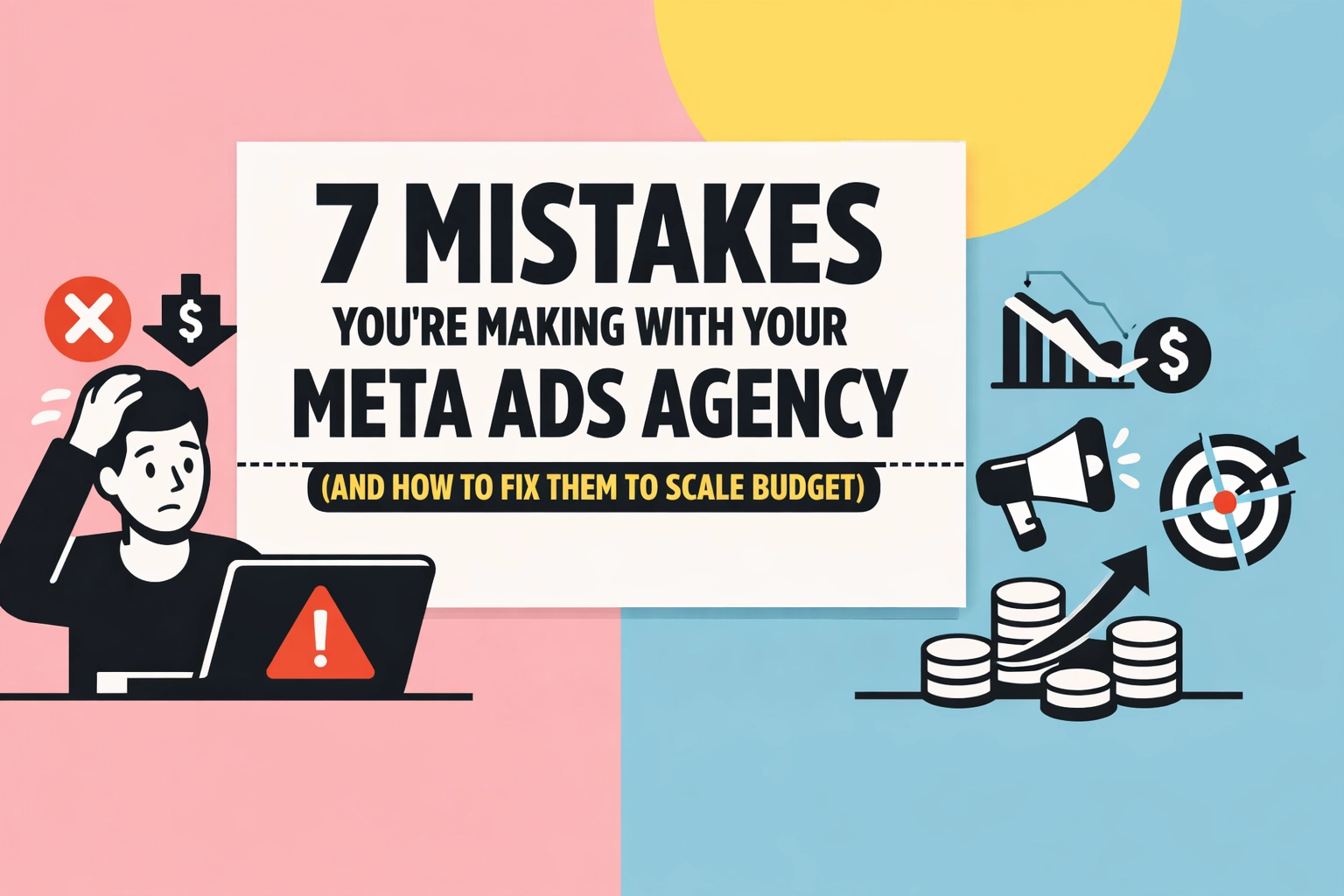
Scaling an e-commerce brand on Meta has evolved significantly since the early days of "interest-based" targeting and simple image ads. In 2026, the platform’s machine learning has reached a level of sophistication where manual intervention often does more harm than good. Despite this, many digital marketing agencies continue to operate using outdated playbooks.
The primary disconnect in the current market is the focus on "ad management" as a siloed task. Many brands find themselves trapped in a cycle where budgets are spent, but profitability remains stagnant because the agency is focused on clicking buttons rather than building a Performance Ecosystem. A true growth partner understands that Meta ads are merely one gear in a larger machine that includes unit economics, creative strategy, and post-click optimization.
If growth has hit a plateau or if scaling the budget results in a diminishing return on ad spend (ROAS), it is likely due to one of several systemic errors in how the account is being managed.
1. Flying Blind Without Solid Unit Economics
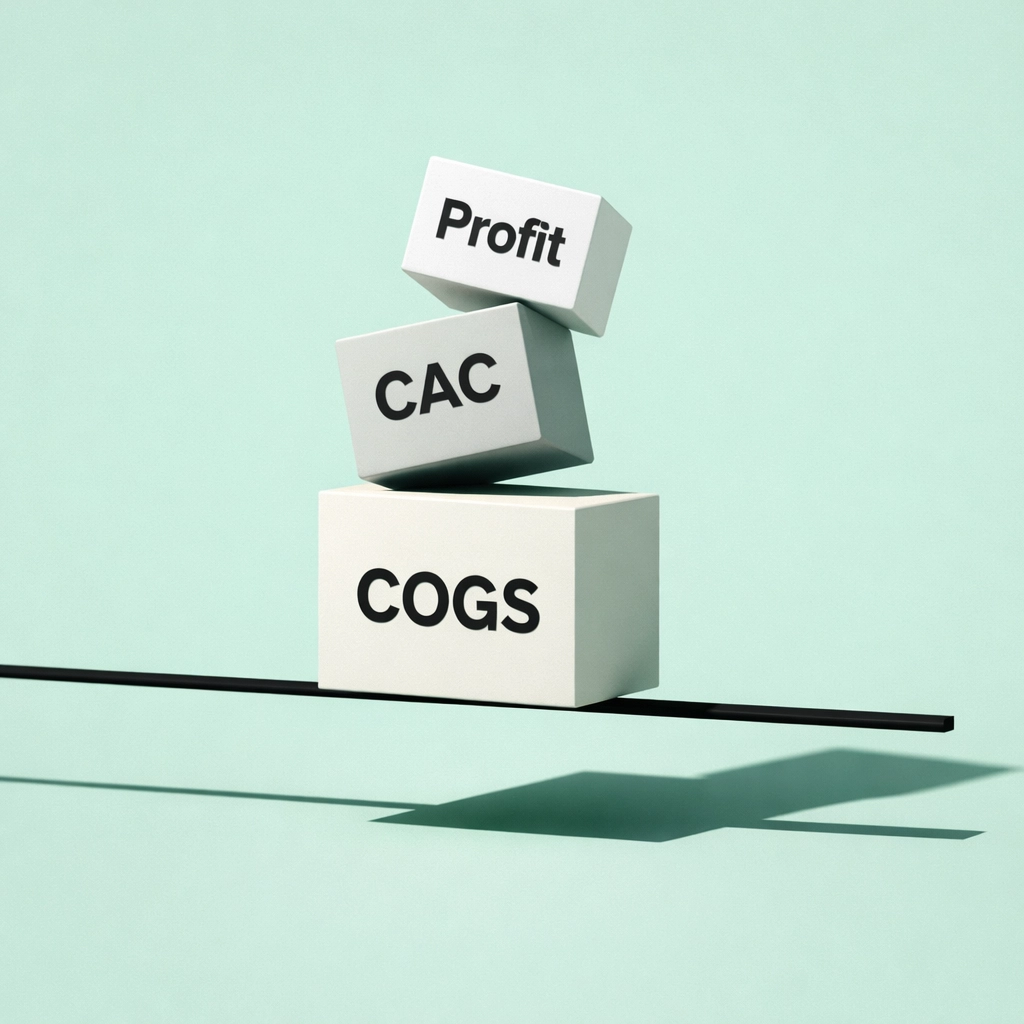
One of the most frequent errors identified in underperforming accounts is a lack of alignment between the agency and the brand's actual financial health. Many agencies focus on platform ROAS: a metric that can be easily manipulated: without understanding the brand's Contribution Margin or Customer Acquisition Cost (CAC) thresholds.
Operating without these numbers is a recipe for "profitable failure." An agency might report a 4x ROAS, but if the brand’s overhead, COGS, and shipping costs require a 4.5x ROAS to break even, every dollar spent is actually eroding the business.
The Fix: Before a single ad is launched, a comprehensive audit of unit economics is required. Successful brands define their "North Star" metric: whether it’s a target CAC or a minimum ROAS: based on actual bank account profitability, not just platform data.
2. Resetting the "Learning Phase" via Incorrect Scaling
There is a common misconception that to scale a winning ad, one must duplicate it into a new campaign with a higher budget. This is perhaps the most destructive "manual" habit an agency can have. Meta’s algorithm functions on historical data; when an ad is duplicated, that data is left behind.
Think of a winning ad like a plant that has found its perfect soil. Moving it to a different pot (a new campaign) forces it to re-establish its roots. This "re-learning" phase often leads to volatility and a sudden drop in performance, causing agencies to panic and turn off what was once a top performer.
The Fix: Scaling should be handled through incremental budget increases (10-20% every 48-72 hours) or by using automated rules. By keeping the winning creative in its original environment, the algorithm can continue to leverage the thousands of data points it has already collected about who is likely to convert.
3. Relying on Surface-Level Conversion Tracking
In the post-iOS 14.5 era, basic pixel tracking is no longer sufficient. Agencies that rely solely on the browser-based Meta Pixel are likely missing 30% to 50% of their conversion data. When the algorithm receives incomplete data, it makes poor decisions about where to allocate spend.
If an agency is still reporting purely based on what the Meta Ads Manager dashboard shows without cross-referencing first-party data or server-side tracking, they are optimizing for a distorted reality.
The Fix: Implement a robust tracking infrastructure using Conversions API (CAPI) and server-side tracking. This ensures that the "feedback loop" between your website and Meta’s AI is as clean and comprehensive as possible. High-growth brands, such as those analyzed in our case studies, prioritize data hygiene to ensure every dollar is accounted for.
4. Hyper-Targeting and Narrow Audience Segmentation
Many agencies feel the need to "prove their value" by creating complex audience segments: "Women, 25-34, interested in yoga, living in coastal cities." While this felt strategic five years ago, it is now an anchor on performance.
Narrow targeting limits the algorithm's ability to find customers outside of your perceived demographic. It increases CPMs (Cost Per Mille) because you are competing for a very small slice of the auction. In 2026, Creative is the Targeting.
The Fix: Move toward "Broad" targeting. Instead of telling Meta who to show the ad to via demographic buttons, use the ad creative itself to attract the right person. If your video features a specific pain point and solution, the people who engage with it will define the audience. This allows the AI to find customers you never would have thought to target manually.

5. Strategic Conflict: Mixing Bidding Methods
A significant error in account architecture is the simultaneous use of "Highest Volume" and "Cost Control" (Cost Caps) strategies within the same environment without proper isolation. When these two methodologies compete, the Highest Volume campaigns tend to act as a "bully," dominating the auction and driving up costs while starving the more efficient Cost Cap campaigns of spend.
The Fix: Choose a primary scaling strategy based on the brand's current needs. If the goal is profitable, steady growth, Cost Controls are essential. They prevent the algorithm from overspending on days when the auction is too expensive. This shift from "spend-focused" to "profit-focused" bidding is a hallmark of a modern performance marketing agency.
6. Mixing Products with Vastly Different Price Points
When an agency lumps a $40 entry-level product and a $400 premium bundle into the same campaign, Meta’s AI will almost always take the path of least resistance. It will spend 90% of the budget on the $40 product because it is easier to generate a high frequency of "clicks" and "conversions" for a lower-priced item.
This leaves the high-AOV (Average Order Value) products underfunded, even if they have much higher profit margins.
The Fix: Separate products by AOV and margin profile. This allows you to set specific budget allocations and performance targets for your "hero" products versus your "upsell" or "entry-level" items. This structural clarity is vital for brands looking to scale their revenue effectively.
7. Lack of Testing Rigor and Premature Intervention
The "tinker" reflex is the enemy of scale. Many agencies check accounts daily and make major changes based on 24 hours of data. Because Meta’s reporting can be delayed and daily fluctuations are normal, this leads to a "whack-a-mole" management style where no ad is ever given the time to mature.
Furthermore, many agencies fail to conduct proper A/B tests. They change three variables at once (headline, video, and landing page), making it impossible to know which change actually drove the result.
The Fix: Adopt a "7-Day Rule." No major campaign changes should be made without at least seven days of consistent data. Use a structured testing framework: such as a "Sandbox" campaign for testing creatives: before moving winners into a "Scaling" environment.

The Performance Ecosystem vs. Simple Ad Management
Fixing these seven mistakes requires more than just a change in settings; it requires a shift in philosophy. At JN Marketing, we move away from the "siloed agency" model and toward a Performance Ecosystem.
In an ecosystem, the ads are not viewed in isolation. We analyze how the creative strategy impacts the landing page conversion rate, how the tracking data feeds back into the bidding strategy, and how the overall unit economics dictate the scale of the budget. This holistic approach is why we have been able to help brands like Beyond achieve unprecedented growth.
When the entire ecosystem is optimized, scaling becomes a mathematical certainty rather than a gamble.
Results: Scaling Through Systemic Precision
By moving away from manual "hacks" and toward an ecosystem-driven approach, brands can see dramatic shifts in their performance metrics. In our work with high-growth e-commerce partners, we have consistently seen:
– 140% Increase in profitable spend within the first 90 days of ecosystem implementation.
– 35% Reduction in blended CAC by shifting to Broad targeting and creative-led optimization.
– 92% Accuracy in data attribution through the implementation of server-side tracking and CAPI.
Our approach with Ascend highlighted the power of this transition, where we moved the brand from a stagnant "ad management" relationship to a growth-focused partnership that prioritized bottom-line profit.