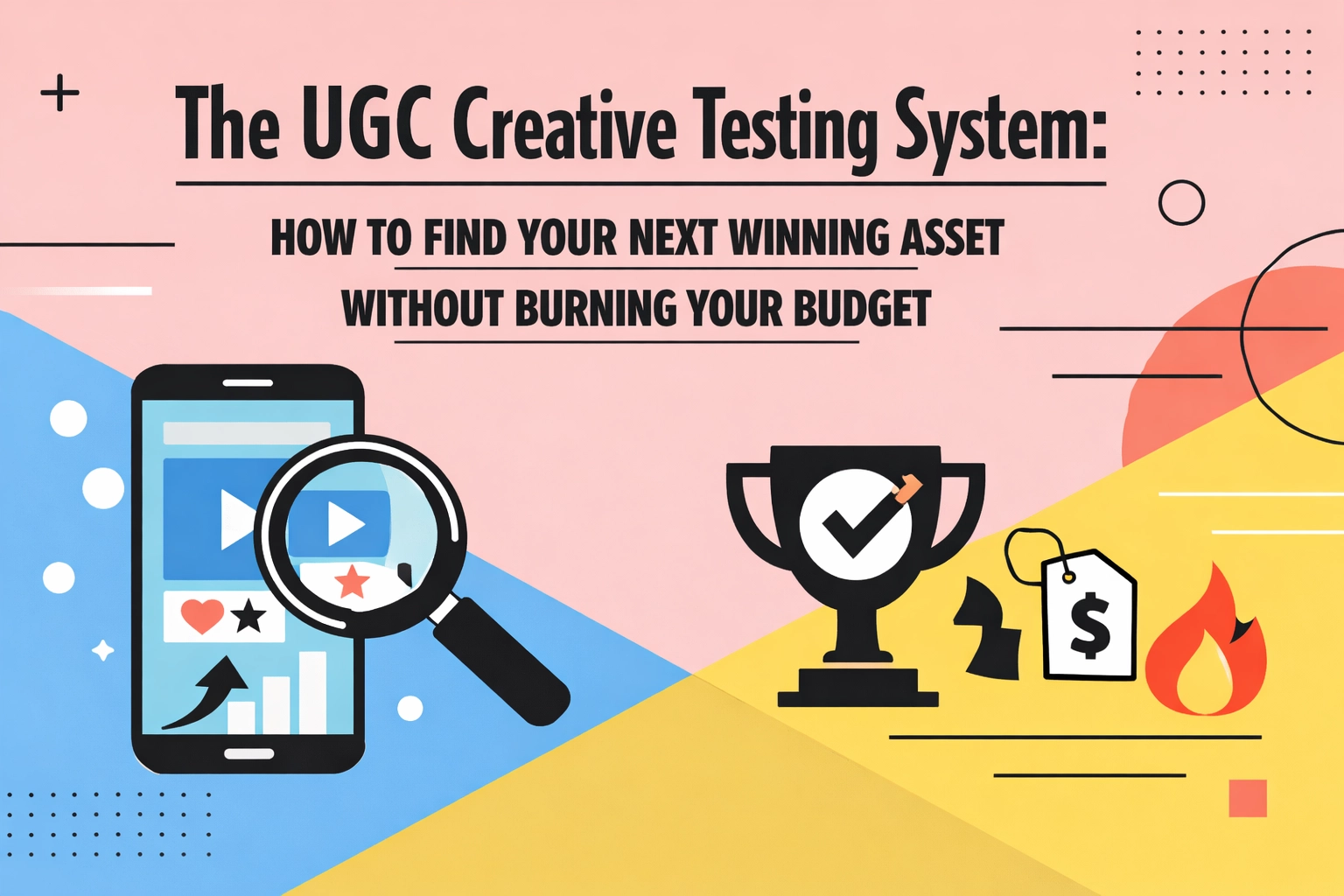
The UGC Creative Testing System: How to Find Your Next Winning Asset Without Burning Your Budget
![[HERO] The UGC Creative Testing System: How to Find Your Next Winning Asset Without Burning Your Budget](https://cdn.prod.website-files.com/67ce3e595a19b9c6f4166e8d/699cbe3faf0d209562bd70b9_avE9kXFqNKC.webp)
Most brands are hemorrhaging budget on UGC creative testing. They commission 30 videos, throw everything at the wall, and pray something sticks. When a creative "works," they can't explain why. When it flops, they just order more content and hope for better luck next time.
That's not testing. That's gambling.
Real creative testing isn't about volume: it's about building a system that isolates what actually drives performance. When you test strategically, you don't need 30 videos to find a winner. You need a hypothesis, a structured framework, and the discipline to change one variable at a time.
Here's the exact system we use at JN Marketing to find winning UGC assets for CPG brands and mid-size ecommerce companies: without burning through creative budgets like they're going out of style.
The Problem With How Most Brands Test UGC
Let's be honest: most "testing" isn't testing at all. A brand will launch five different UGC videos simultaneously: different hooks, different creators, different product angles, different CTAs: and whichever one gets the best ROAS gets declared the "winner."
But what did you actually learn?
Was it the hook? The creator's delivery style? The way they framed the problem? The CTA? You have no idea. And when you try to replicate that success, you can't, because you never isolated what worked in the first place.
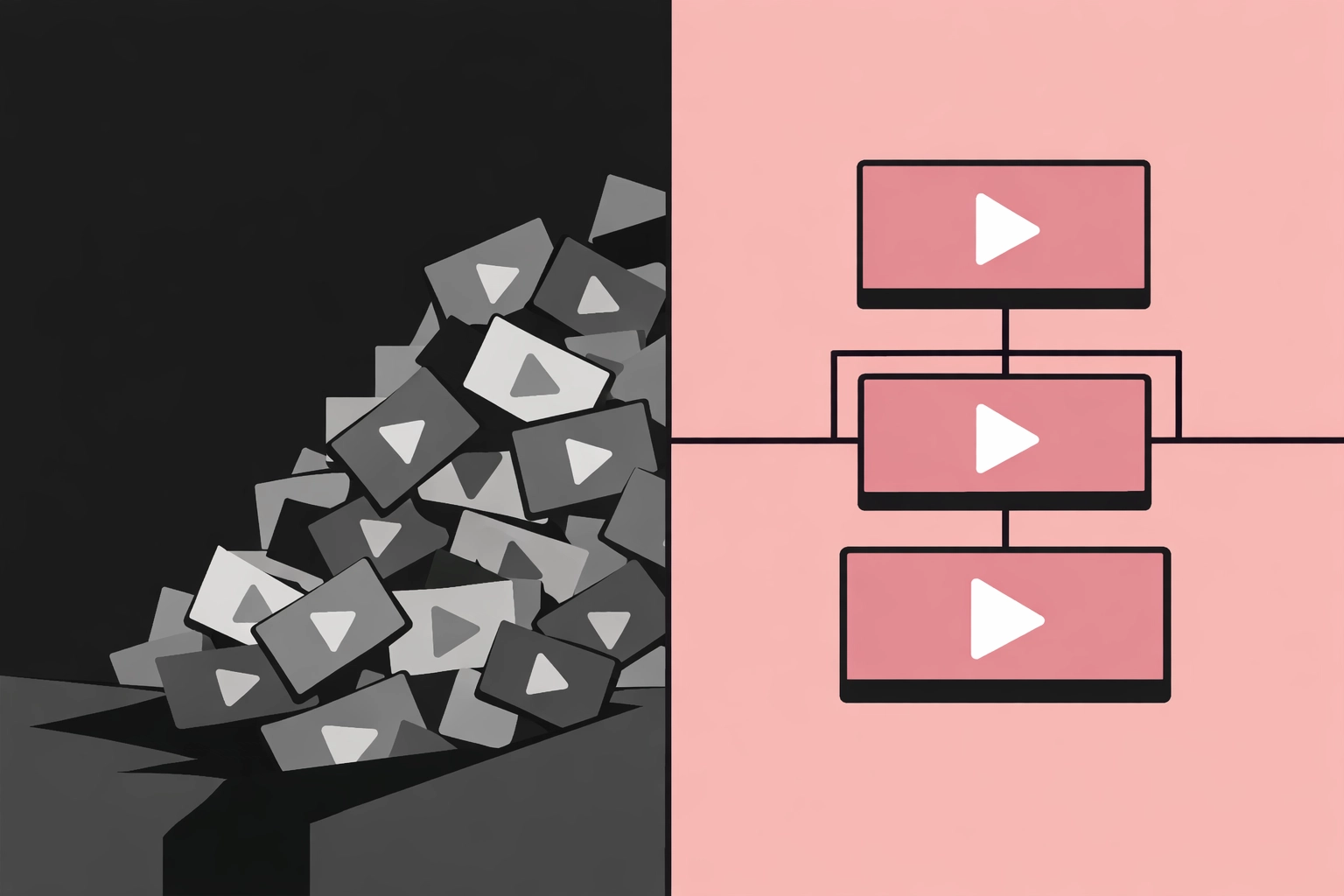
This approach leads to three predictable outcomes:
– Wasted Creative Budget – You're paying for dozens of videos when you could extract the same insights from a fraction of the content.
– Inconsistent Performance – Without understanding why something works, you can't reliably reproduce results.
– Creative Fatigue – You burn through fresh angles faster than you can test them, leaving you scrambling for the next "big idea."
The solution isn't more content. It's a structured testing system that treats creative like the variable it is: something you can measure, iterate on, and optimize systematically.
The Three-Part Framework: Hooks, Bodies, and CTAs
Every UGC video has three core components: the hook (first 3 seconds), the body (middle section), and the CTA (closing). Each component serves a distinct function, and each needs to be tested independently before you start layering complexity.
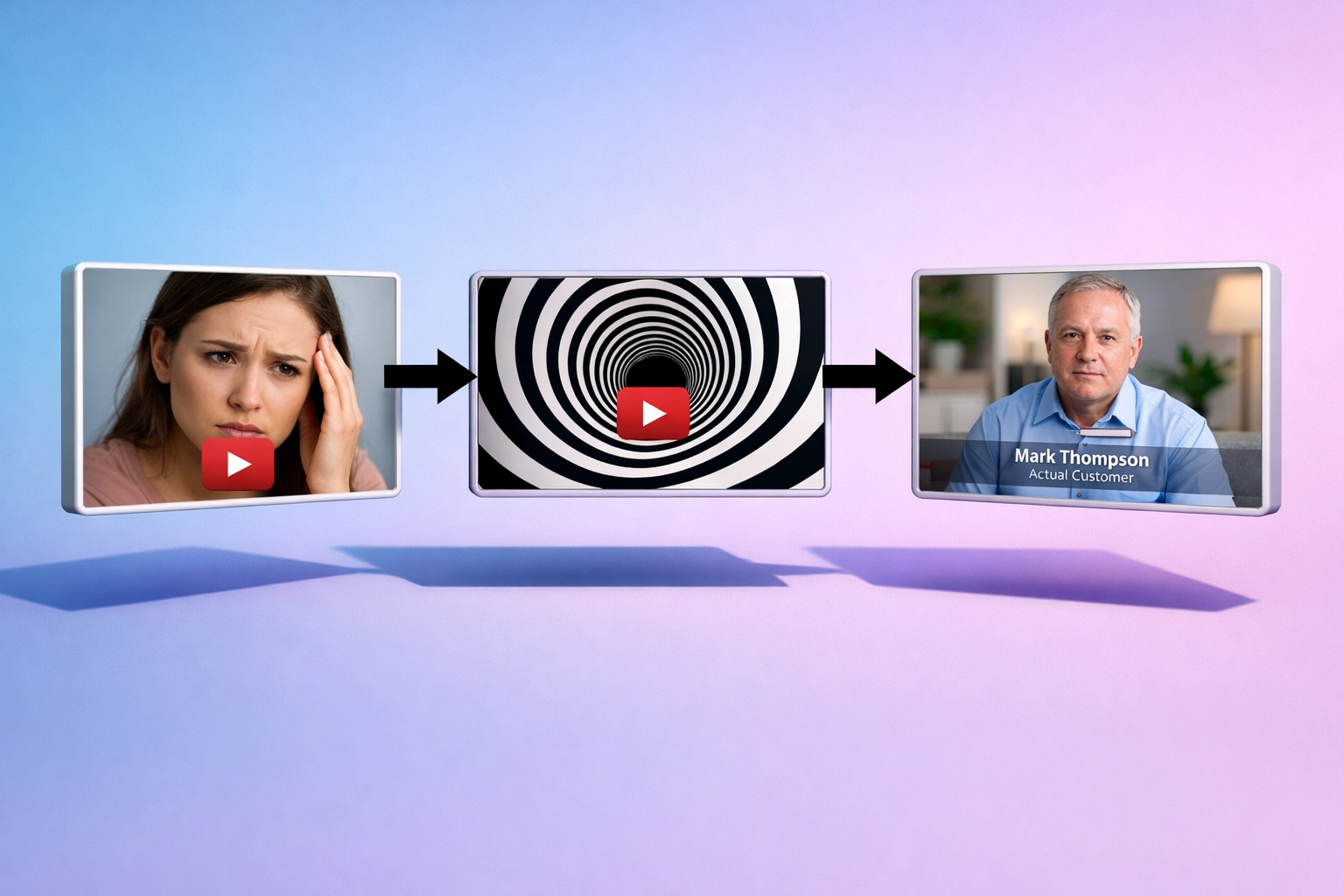
Testing Hooks: Stop the Scroll
The hook's job is singular: stop thumb momentum. It's not about being clever or on-brand. It's about interrupting the pattern of endless scrolling long enough for someone to pay attention.
We structure hook testing around three core approaches:
– Problem-First Hooks – "Still buying [product category] that [common frustration]?"
– Pattern-Interrupt Hooks – Unexpected visual or statement that breaks expectations
– Social Proof Hooks – "This is why [X number] of people switched to..."
When testing hooks, everything else stays constant. Same creator, same body content, same CTA. You're isolating one variable: which opening gets people to watch past 3 seconds.
A wellness brand we worked with tested three hook variations on the same video. The problem-first hook achieved 40% higher engagement than the pattern-interrupt approach: not because it was "better," but because it resonated specifically with their audience's pain points.
Testing Bodies: Build the Case
Once you've validated a hook structure, you move to the body. This is where you make the argument for why someone should care about your product.
We test bodies across three dimensions:
– Feature-Focused vs. Benefit-Focused – Does your audience respond better to "how it works" or "what it does for you"?
– Creator-to-Camera vs. B-Roll Heavy – Some audiences trust direct address; others want to see the product in action.
– Problem-Solution Arc vs. Transformation Story – Do they need to see the struggle, or do they just want the result?
Same hook, same CTA, different middle sections. You're measuring watch-through rate and engagement drop-off to understand which narrative structure keeps attention.
Testing CTAs: Drive the Action
The CTA determines whether attention converts into action. Too soft, and you leave conversions on the table. Too aggressive, and you trigger resistance.
We structure CTA testing around urgency and friction:
– Direct Command – "Shop now" / "Try it today"
– Reduced Friction – "See if it's right for you" / "Check it out"
– Urgency Layer – "Limited stock" / "Sale ends soon"
One CPG client saw an 18% drop in CAC simply by changing their CTA from "Learn more" to "Grab yours before we sell out": same video, same audience, different call to action.
The Data-Driven Iteration Process
Testing isn't a one-time event. It's a continuous cycle: test, measure, learn, iterate. Here's how we structure testing cycles to compound insights without burning budget.
Week 1: Hypothesis and Launch
Start with a clear hypothesis. "We believe problem-first hooks will outperform pattern-interrupt hooks because our audience is solution-focused, not entertainment-driven."
Launch 2-3 variations with a defined sample size. Set your significance threshold upfront: typically 95% confidence and at least 1,000 impressions per variant. This prevents you from calling a winner too early based on statistical noise.
Week 2: Measurement and Analysis
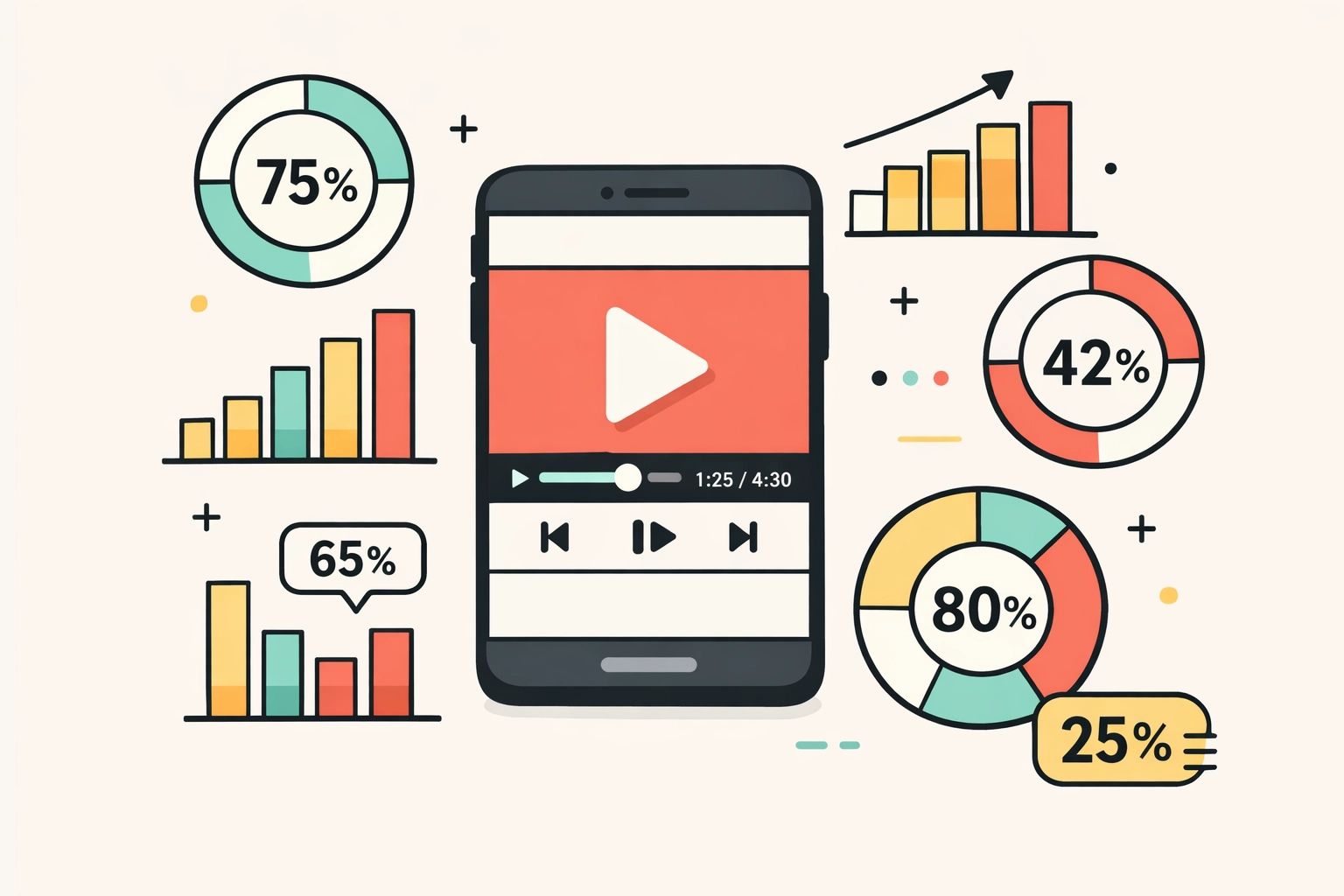
Track the metrics that matter for each component:
– Hooks: 3-second view rate, thumb-stop ratio
– Bodies: Average watch time, completion rate
– CTAs: Click-through rate, conversion rate
Tag everything. Use consistent naming conventions so you can analyze patterns across campaigns: Hook_Type_ProblemFirst, Body_Format_DirectAddress, CTA_Urgency_High.
Week 3: Scale or Iterate
If you have a clear winner (statistically significant performance lift), scale it. If results are inconclusive, iterate on the hypothesis and test again.
Don't chase marginal improvements. A 3% lift isn't worth restructuring your entire creative strategy. Focus on meaningful differences: 15%+ performance improvements: that justify the operational cost of change.
Budget Protection: Testing Smart, Not Hard
The biggest mistake brands make is treating testing like a research project instead of a profit center. Every test should either validate a winning approach or eliminate a losing one: both outcomes save you money.
Start Small, Scale Wins
Don't allocate 50% of your budget to "testing." Start with 10-15% on structured experiments. Once you validate a winner, shift budget from underperforming creative into proven approaches.
This prevents the trap of "testing forever" without scaling what works. Testing is a means to an end, not the end itself.
Rotate Proactively, Not Reactively
Creative fatigue is real. Even winning assets degrade over time. Build rotation schedules into your calendar: refresh creative every 4-6 weeks before performance drops, not after.
This keeps your CAC stable and prevents the panic of scrambling for new creative when your star performer suddenly stops working.
Cross-Platform Learning
What works on Meta often informs what works on TikTok and YouTube. Use a centralized dashboard to track insights across platforms. When you discover that benefit-focused bodies outperform feature-focused content, test that hypothesis everywhere.
This compounds your learning velocity and prevents you from reinventing the wheel on each platform.
Why This System Works
Most brands treat UGC creative like art. We treat it like science.
When you test methodically: one variable at a time, with clear hypotheses and statistical rigor: you eliminate guesswork. You build institutional knowledge. You create a repeatable system that generates winning assets faster and cheaper than "order 30 videos and see what happens."
The brands that scale sustainably aren't the ones with unlimited creative budgets. They're the ones with disciplined testing systems that turn creative into a predictable growth lever instead of a cost center you hope works out.
If you're a CPG brand or mid-size ecommerce company ready to stop gambling on creative and start systematically finding winners, let's talk. We're a performance marketing agency that builds testing systems that actually work: and we've got the case studies to prove it.
Because at the end of the day, your next winning asset isn't hiding in your 30th UGC video. It's hiding in the system you use to find it.