![[HERO] Performance Max & Advantage+ Killing Your ROAS? Here's What You're Feeding the Machine Wrong](https://cdn.prod.website-files.com/67ce3e595a19b9c6f4166e8d/699b918ba7bed98491ff63f9_gI72WzPqszG.webp)
You've been told Performance Max and Advantage+ are the future. AI-powered optimization. Set it and forget it. Let the algorithm do the heavy lifting.
But your ROAS is tanking. Your budget is bleeding. And every time you check the dashboard, you're staring at underperformance wondering what went wrong.
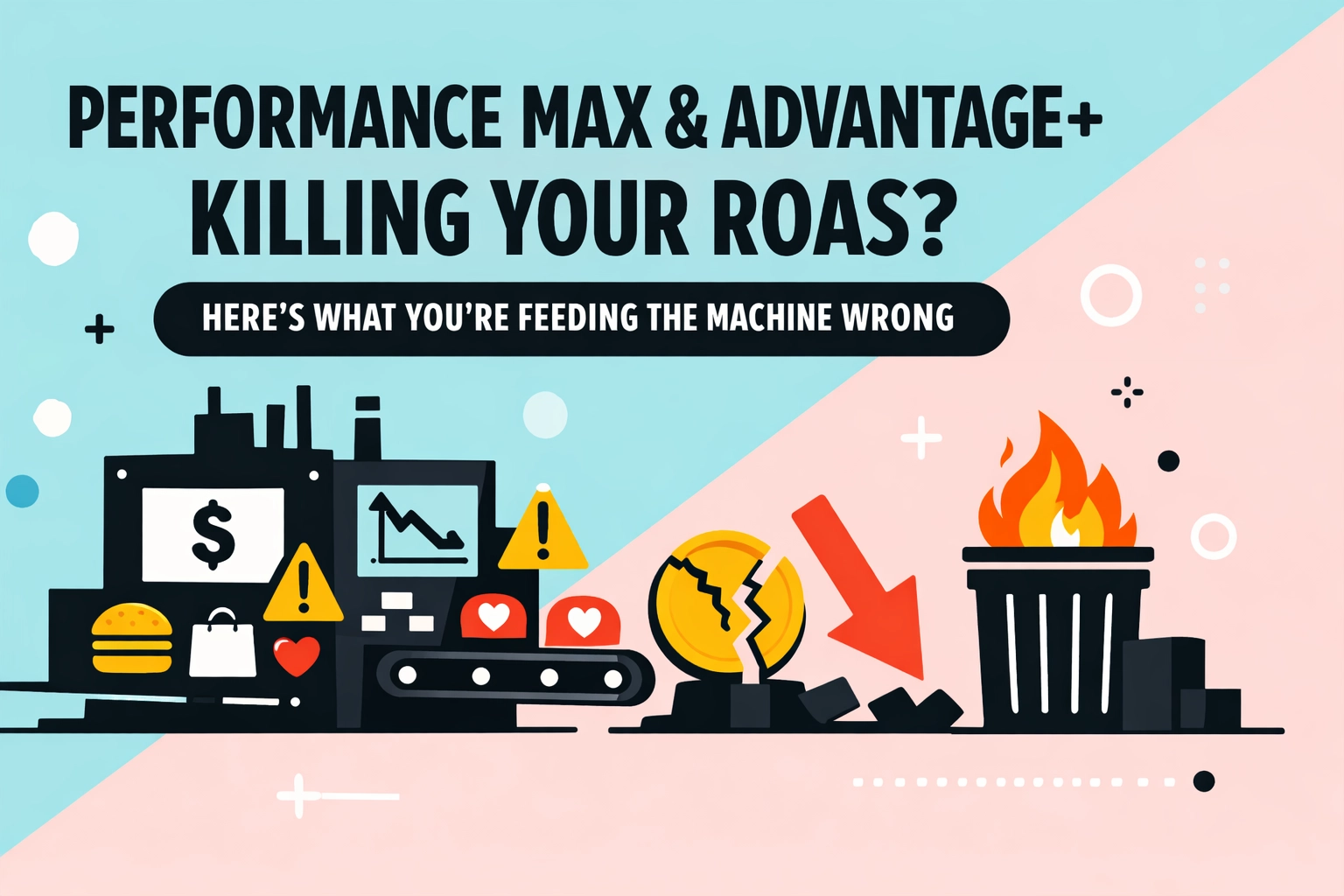
Here's the uncomfortable truth: the algorithm isn't broken. Your inputs are.
Performance Max and Advantage+ aren't magic. They're machines. And like any machine, they produce outputs that directly reflect the quality of what you feed them. Garbage in, garbage out. The black box doesn't absolve you from doing the foundational work, it amplifies whatever signals you give it.
Most ecommerce brands running these campaigns are making the same critical mistakes, and they're wondering why Google and Meta aren't delivering the results they promised. Let's break down what's actually killing your performance.

You're Tracking the Wrong Conversions
This is the biggest, most expensive mistake brands make with automated campaigns. You're optimizing for vanity metrics instead of revenue.
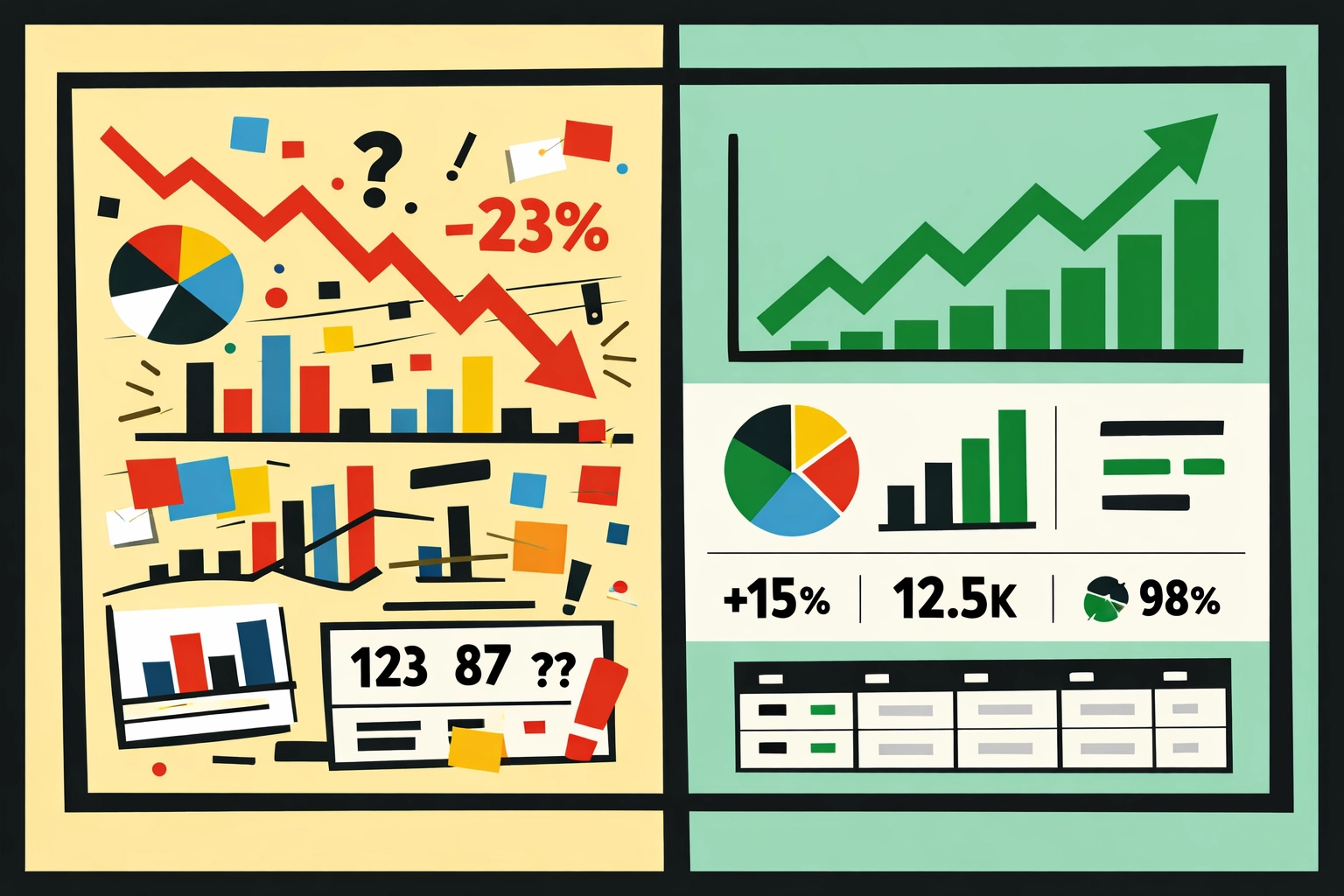
Many advertisers track view-through conversions or "thank you" page views rather than actual transaction values. This teaches the algorithm to chase impressions and visits, not purchases. When you switch to click-only conversion tracking, your ROAS will initially drop 40-60%. Don't panic, that's the real performance revealing itself. But within 3-4 weeks, as the algorithm learns what actually drives revenue, ROAS typically improves by 80-150%.
Even worse? Tracking basic conversions instead of transaction values. If you're telling Performance Max "a conversion happened" without telling it how much that conversion was worth, you're asking it to optimize blind. The algorithm can't distinguish between a $20 purchase and a $200 purchase. Implementing actual transaction value tracking can improve ROAS by 30-50% because now the machine knows which users are worth acquiring.
The fix: Use Google Ads conversions as your primary goal, not GA4. Google Ads records significantly more purchase data than GA4 conversions. Always optimize toward the most complete data source available.
Your Creative and Product Feeds Are Weak
Performance Max thrives on variety. If you're feeding it the same 3 tired product images and generic copy from 2023, the algorithm has nothing to work with.
You need comprehensive asset libraries, at minimum, 15+ assets per type. That means:
- Multiple headline variations
- Various description lengths
- Different image angles and styles
- Video content (yes, even for search campaigns)
- Mobile-specific creative
The algorithm tests combinations across placements, audiences, and contexts. Limited inputs mean limited testing, which means limited optimization. You're handcuffing the machine before it even starts.
Your product feed structure matters just as much. Poor categorization, missing attributes, low-quality images, and vague product titles directly limit what Performance Max can do. The algorithm uses this data to understand context, match search intent, and serve relevant ads. Clean it up.
You're Giving the Algorithm Zero Direction
Audience signals aren't optional. They're how you teach the machine what "good" looks like.
Too many brands launch Performance Max campaigns with no audience layering whatsoever. You're essentially telling Google "figure it out" with zero context about who your customers are.
Effective audience signals include:
- Customer match lists (past purchasers, high-LTV segments)
- Website visitor segments (product viewers, cart abandoners)
- In-market audiences for relevant categories
- Affinity audiences aligned with your brand
The more granular your signals, the faster the algorithm learns. This doesn't restrict targeting, it provides a starting point. Performance Max will still explore beyond these audiences, but it learns what success looks like much faster when you give it examples.
You're Impatient and Making Reactive Changes
Performance Max requires 4-6 weeks to fully optimize. Not 5 days. Not 2 weeks. Actual learning takes time.
Most brands kill campaigns prematurely because they don't see immediate results. The algorithm needs to gather data, test combinations, identify patterns, and refine targeting. Shutting it down after 10 days because "it's not working" prevents the system from ever reaching competence.
Just as damaging? Switching bidding strategies too early. Starting with "Maximize Conversions" is appropriate when you're new and need volume. But jumping to "Maximize Conversion Value with Target ROAS" before you have 50+ conversions and 4-6 weeks of data handicaps learning. The algorithm doesn't have enough signal to optimize toward a ROAS target yet.
On the flip side, setting targets too aggressively during the learning phase chokes delivery. If your historical ROAS is 3.5x and you set a 6x target from day one, you're restricting the algorithm's ability to gather data across a reasonable audience range.

Your Offers Don't Justify the Acquisition Cost
Here's something nobody wants to hear: sometimes the algorithm is working fine, but your offer is weak.
Performance Max and Advantage+ can't manufacture demand that doesn't exist. If your product positioning is unclear, your pricing isn't competitive, or your creative doesn't communicate value, no amount of algorithmic optimization will save you.
The machine can find people likely to convert. It cannot convince people to buy something they don't want or trust. That's your job.
Ask yourself:
- Would you buy this product at this price from this ad?
- Does your landing page match the promise in your creative?
- Is your value proposition clear within 3 seconds?
- Are you giving people a reason to buy now versus later?
If the answers aren't confident "yes" responses, fix the fundamentals before blaming the algorithm.
What Good Inputs Actually Look Like
Brands that succeed with Performance Max and Advantage+ share common patterns. They treat these campaigns like systems, not set-it-and-forget-it solutions.
They feed the algorithm:
- Accurate conversion tracking tied to actual revenue, not proxy metrics
- Diverse creative libraries refreshed monthly with new angles, hooks, and formats
- Clean, comprehensive product feeds with detailed attributes and quality imagery
- Layered audience signals using first-party data and behavioral segments
- Realistic bidding strategies with targets based on historical performance, not wishful thinking
- Patience during learning phases, with disciplined testing windows before making changes
They also maintain a full-funnel measurement approach. ROAS isn't the only metric that matters. They track new customer acquisition cost, customer lifetime value, contribution margin, and incrementality. They understand that efficient customer acquisition at scale requires looking beyond last-click attribution.

The Bottom Line
Performance Max and Advantage+ are powerful tools, but they're not autonomous. They require strategic inputs, quality creative, accurate data, and patience to work properly.
If your campaigns are underperforming, the first place to look isn't the algorithm's settings: it's the quality of what you're feeding it. Fixing tracking, upgrading creative, cleaning product feeds, and providing better audience signals will do more for your ROAS than endlessly tweaking bids.
The brands winning with automated campaigns treat them as performance marketing systems that require ongoing optimization, not passive money-printing machines. They invest in the inputs because they understand the outputs are only as good as what goes in.
If you're ready to stop blaming the black box and start feeding it what it actually needs to perform, let's talk. We've scaled dozens of ecommerce brands by fixing these exact input problems; turning underperforming campaigns into profitable growth engines.
The algorithm isn't your enemy. Bad inputs are.