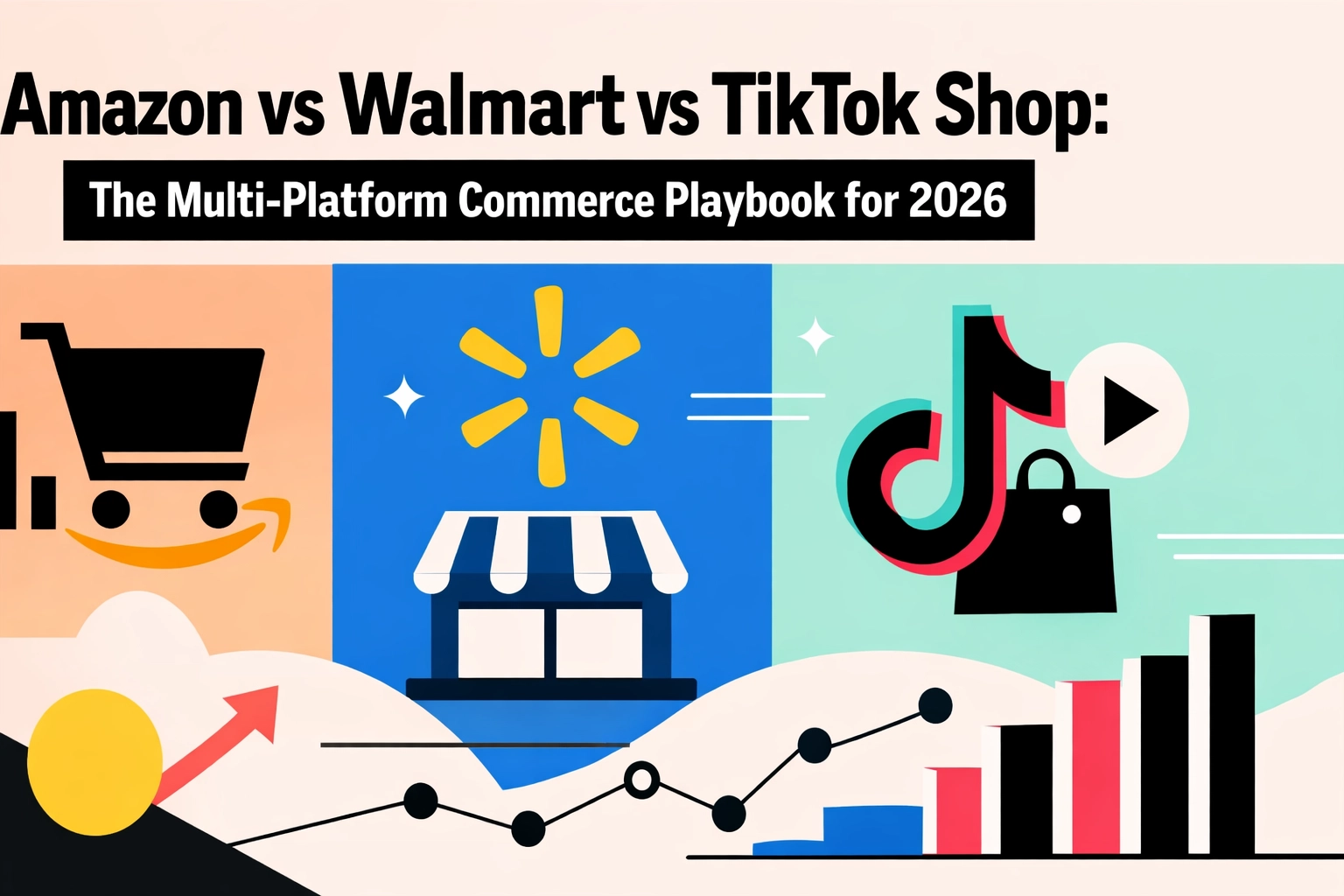
![[HERO] Amazon vs Walmart vs TikTok Shop: The Multi-Platform Commerce Playbook for 2026](https://cdn.prod.website-files.com/67ce3e595a19b9c6f4166e8d/699b91f2b6169835b628ef5d_1BWJF2Bzc4Q.webp)
Here's the question every ecommerce brand is asking right now: "Should I go all-in on Amazon, TikTok Shop, or Walmart?"
Wrong question.
The brands winning in 2026 aren't picking sides: they're running a coordinated multi-platform strategy that treats each channel like a specialized tool in their growth stack. Because here's the truth: multi-channel sellers earn 190% more revenue than single-channel retailers. And the gap is only getting wider.
Let's break down exactly how Amazon, TikTok Shop, and Walmart fit into your 2026 commerce strategy: and why the smartest move is using all three.
The Platform Landscape Right Now
First, let's talk numbers.
Amazon pulled in $716.9 billion in revenue for 2025 (up 12% from 2024) and is now on track to rival: or even surpass: Walmart's total revenue. It's the high-intent search monster where people show up with their credit card already out.
TikTok Shop hit $15.1 billion in US sales in 2025 with 68% year-over-year growth. Globally? $64.3 billion in GMV with 94% growth across 16 markets. It's the viral discovery engine that's printing money for brands who know how to ride the algorithm.
Walmart is still the world's biggest traditional retailer by revenue, and they're aggressively expanding their ecommerce play. They're the often-overlooked third channel that gives you access to a massive customer base that doesn't shop on Amazon.
Why You Can't Just Pick One
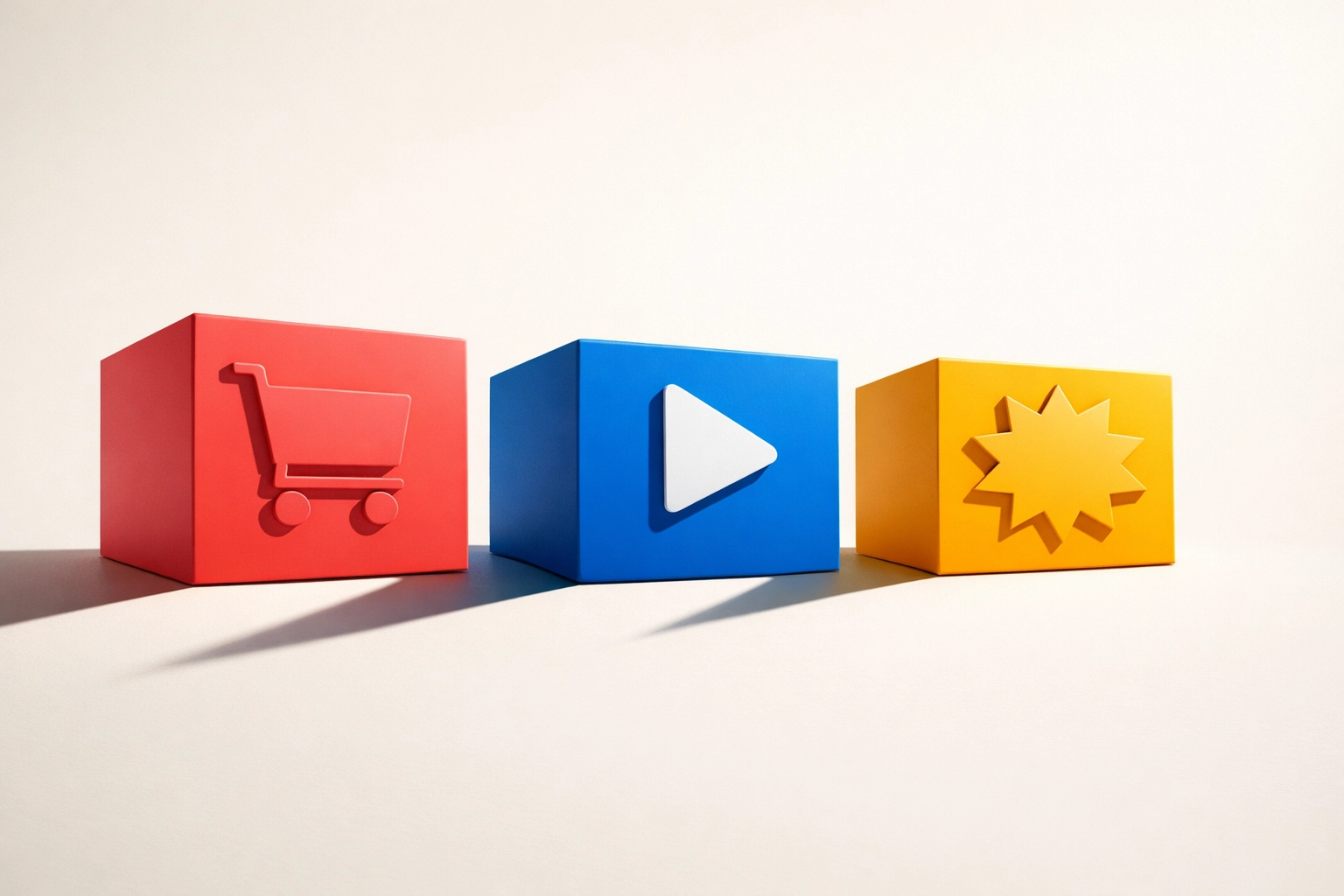
Each platform serves a completely different function in your customer journey. Treating them like interchangeable options is like asking whether you need a hammer, a screwdriver, or a wrench to build a house. You need all three: just for different jobs.
TikTok Shop is your awareness machine. It's where customers discover you don't even know they need your product yet. The platform thrives on viral moments, creator partnerships, and impulse purchases. Customer service expectations are fast (1.1-hour response time vs. 4.2 hours on Amazon) because the whole environment is built for instant gratification.
Amazon is your conversion and fulfillment engine. It's where intent-driven shoppers search for exactly what they need, compare options, read reviews, and buy with one click. Amazon's strength is predictability: keyword optimization, PPC campaigns that scale, and logistics infrastructure that just works.
Walmart is your diversification play. It's a massive retail audience that's underserved by most ecommerce brands. While everyone's fighting for Amazon rankings, Walmart gives you access to customers who actively avoid Amazon or prefer Walmart's shopping experience.
The TikTok Shop Role: Spark the Fire
Let's start with TikTok because that's where the magic happens first.
TikTok Shop is built for rapid awareness and impulse-driven sales. This is where you launch new products, test creative concepts, and generate viral momentum that spills over into every other channel.
Here's how winning brands use it:
- Creator partnerships that feel authentic, not like ads
- Trend-jacking to ride algorithmic waves when they're hot
- UGC-style content that converts because it doesn't look like marketing
- Live shopping events that create urgency and FOMO
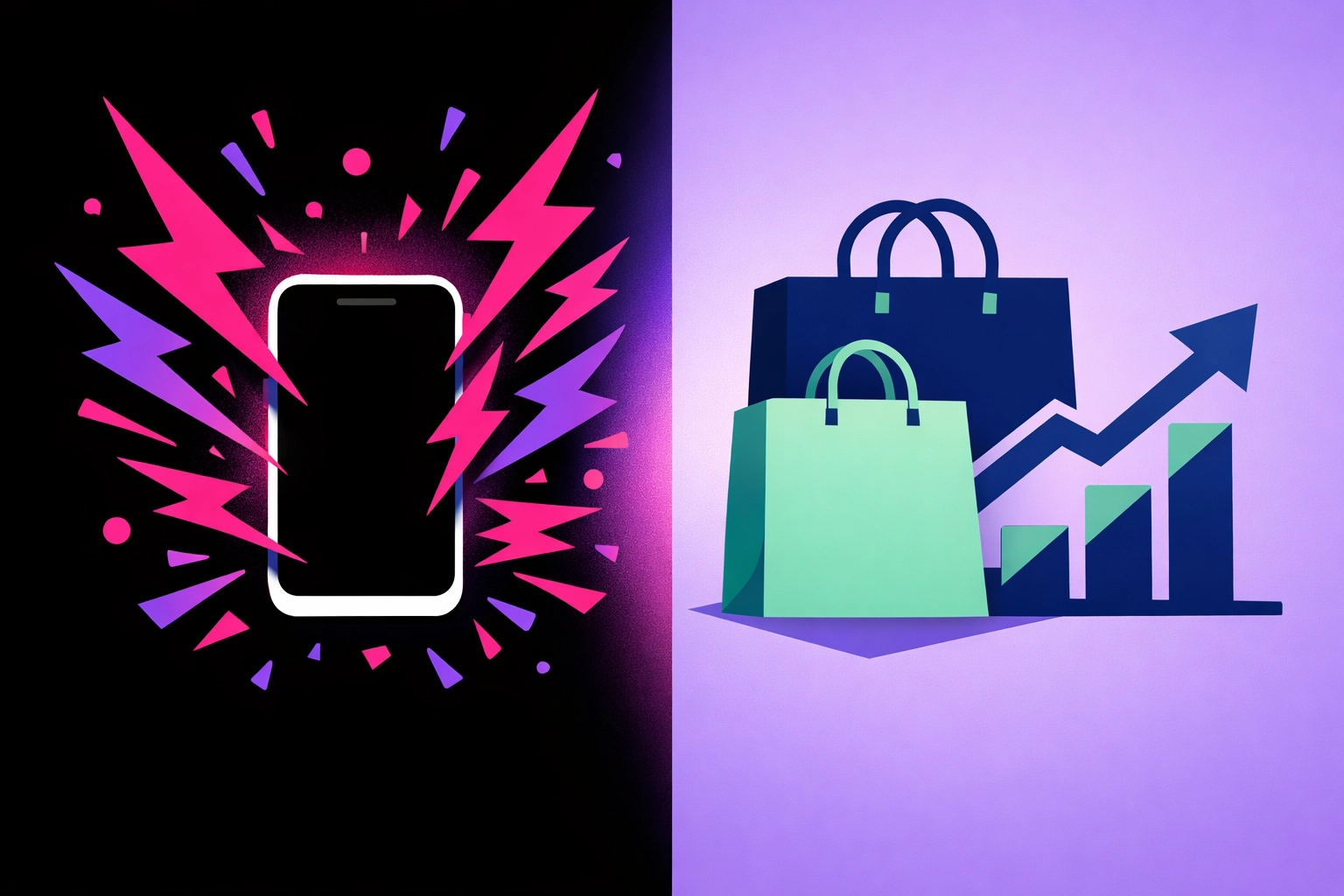
The profit margins are often higher short-term because you're catching people in an impulse-buying mindset. But the real value? When someone sees you on TikTok, they search for you on Amazon. You're not just making a sale: you're building brand recognition that compounds across platforms.
The Amazon Role: Scale the Flame
Once TikTok creates awareness, Amazon converts it into predictable revenue.
This is where high-intent buyers show up after seeing you on TikTok (or hearing about you from a friend who bought on TikTok). They're searching your brand name, comparing your product to competitors, and making an educated purchase decision.
Amazon's advantages are massive:
- Keyword optimization that creates steady, long-term organic traffic
- PPC campaigns that scale predictably with math, not luck
- FBA logistics that handle fulfillment so you don't have to
- Review ecosystems that build trust and social proof
- Subscribe & Save for products that create recurring revenue
The automation tools are mature. The customer behavior is predictable. And unlike TikTok's trend-dependent chaos, Amazon gives you a "set it and forget it" revenue stream once you've dialed in your listing and ad strategy.
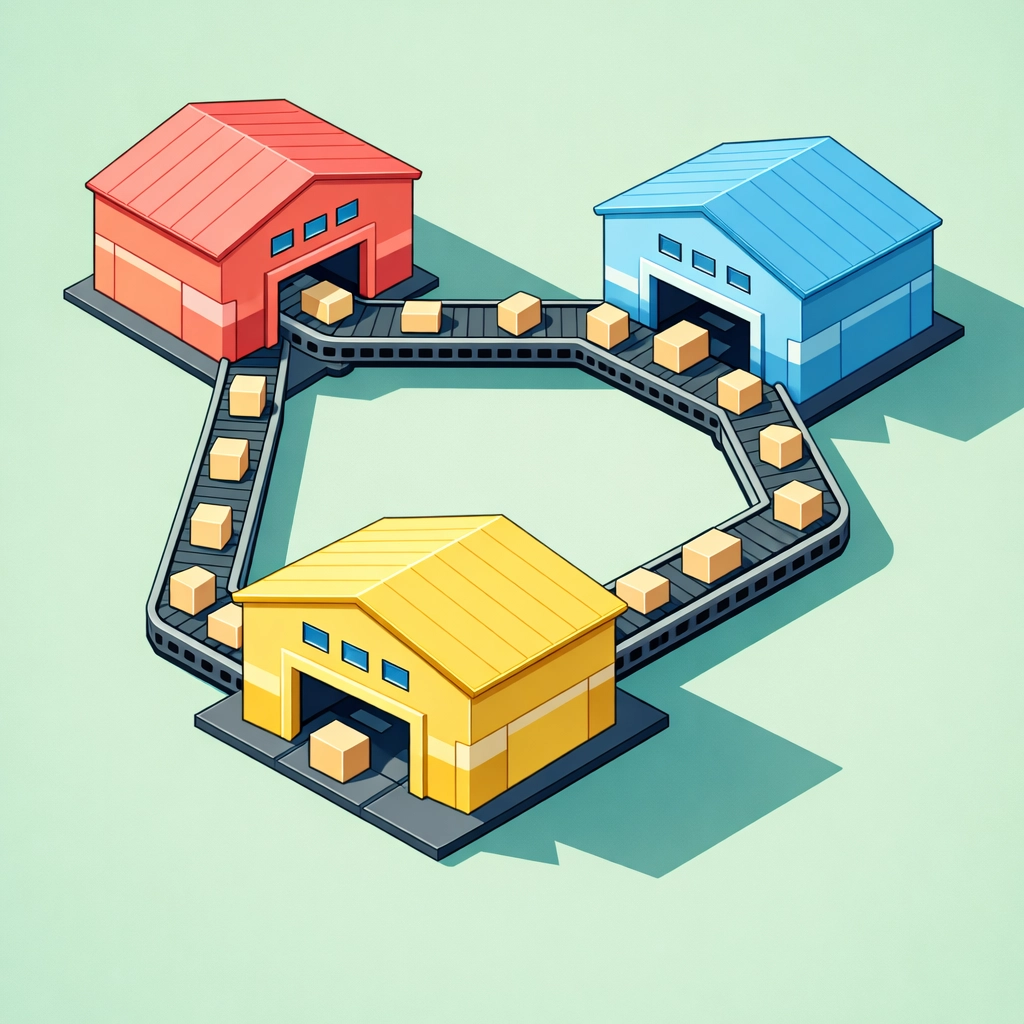
Here's the pro move: Use Amazon FBA as your fulfillment backbone. Keep your main inventory in Amazon's warehouses, then use Multi-Channel Fulfillment (MCF) to ship orders from TikTok and Walmart. When you go viral on TikTok, you won't collapse under fulfillment pressure because Amazon's handling it.
The Walmart Role: Capture the Overlooked Audience
Walmart is the channel most ecommerce brands are sleeping on.
While everyone's fighting for Amazon rankings and chasing TikTok trends, Walmart gives you access to a growing secondary retail market with less competition and massive reach. The customers are real, the platform is investing heavily in ecommerce infrastructure, and the ad costs are often lower than Amazon.
Think of Walmart as your diversification insurance. If Amazon changes their terms, if TikTok gets banned (again), if your account gets suspended: Walmart keeps revenue flowing.
Plus, Walmart shoppers have different buying behaviors. They're value-conscious, they're often buying for families, and they're loyal to the Walmart ecosystem in ways that complement (not compete with) your Amazon and TikTok customers.
The Integrated Playbook: How to Use All Three Together
Here's the exact sequence winning brands are running in 2026:
Step 1: Launch on TikTok Shop
Use creator partnerships and trend-based content to spark viral awareness. Your goal: acquire your first 1,000 customers and generate social proof. Don't worry about perfect profitability yet: you're building momentum.
Step 2: Funnel That Momentum to Amazon
When people see you on TikTok, they search for you on Amazon. Capture that traffic with optimized listings, strong reviews (encourage TikTok customers to leave Amazon reviews), and retargeting ads. Use the viral spike to boost your Amazon ranking.
Step 3: Scale on Walmart as Your Third Channel
Once you've proven product-market fit on TikTok and Amazon, expand to Walmart. Use the creative assets and customer insights from the first two platforms to launch faster and smarter.
Step 4: Unify Your Fulfillment
Keep your main inventory in Amazon FBA. Use Multi-Channel Fulfillment to ship TikTok and Walmart orders from the same pool. This prevents the inventory complexity nightmare of maintaining separate stock across three platforms.
Step 5: Coordinate Your Creative
TikTok teaches you what messaging and creative concepts actually resonate. Take those insights and apply them to your Amazon listing images, A+ content, and Walmart product pages. Let the platform that's best at creative testing (TikTok) inform the platforms that are best at converting (Amazon and Walmart).
Common Mistakes That Kill Multi-Platform Strategies
Mistake #1: Treating each platform the same
TikTok needs fast, native, creator-driven content. Amazon needs optimized listings and keyword strategy. Walmart needs competitive pricing and clean product data. Don't copy-paste your approach across platforms.
Mistake #2: Separate inventory pools
Maintaining different inventory for each platform increases costs and complexity. Use Amazon FBA as your backbone and fulfill everything from one central hub.
Mistake #3: Chasing trends without conversion infrastructure
Going viral on TikTok is worthless if your Amazon listing sucks and you can't capture the search traffic. Build the conversion funnel before you chase virality.
Mistake #4: Ignoring platform-specific customer expectations
TikTok customers expect 1.1-hour response times. Amazon customers are more patient. Walmart customers are value-focused. Adjust your service approach for each.
Mistake #5: Doing it all alone
Most brands don't have the bandwidth or expertise to run high-performance campaigns across three platforms simultaneously. That's where an ecommerce growth agency that specializes in multi-platform strategy makes the difference.
The Bottom Line
In 2026, the question isn't "Which platform should I choose?"
It's "How do I orchestrate all three to maximize my growth?"
Use TikTok Shop to build hype and discover what resonates. Use Amazon to convert that awareness into predictable revenue. Use Walmart to diversify and capture the customers your competitors are ignoring.
The brands that master this playbook aren't just surviving: they're scaling faster than single-platform sellers could ever dream of.
Need help building a multi-platform commerce strategy that actually works? We've helped dozens of ecommerce brands coordinate Amazon, TikTok Shop, and Walmart campaigns that compound into serious growth. Let's talk.